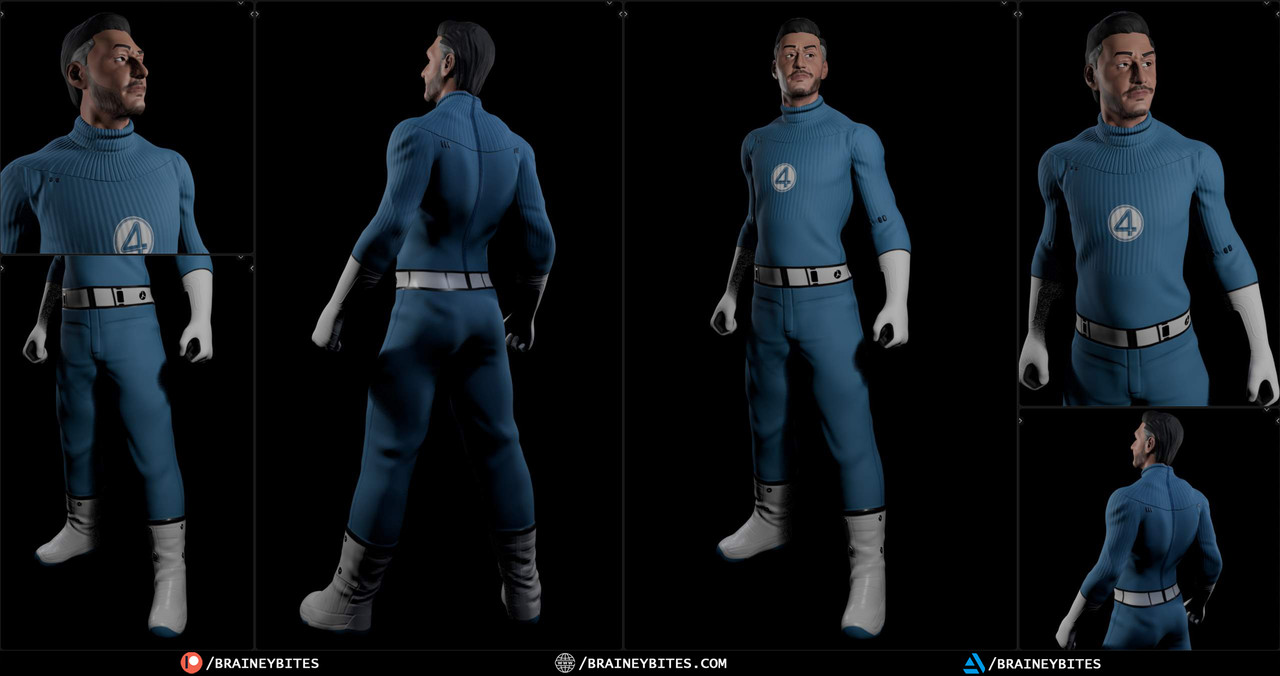
Quick facts (basic information)
- Real name: Reed Richards
- First appearance: Fantastic Four #1 (Nov 1961) — Stan Lee & Jack Kirby
- Main alias: Mr. Fantastic
- Primary powers: Extreme elasticity, body reshaping, genius-level intellect, inventor/strategist
- Key team: Fantastic Four
- Notable alternate identity: The Maker (Ultimate Universe / evil Reed)
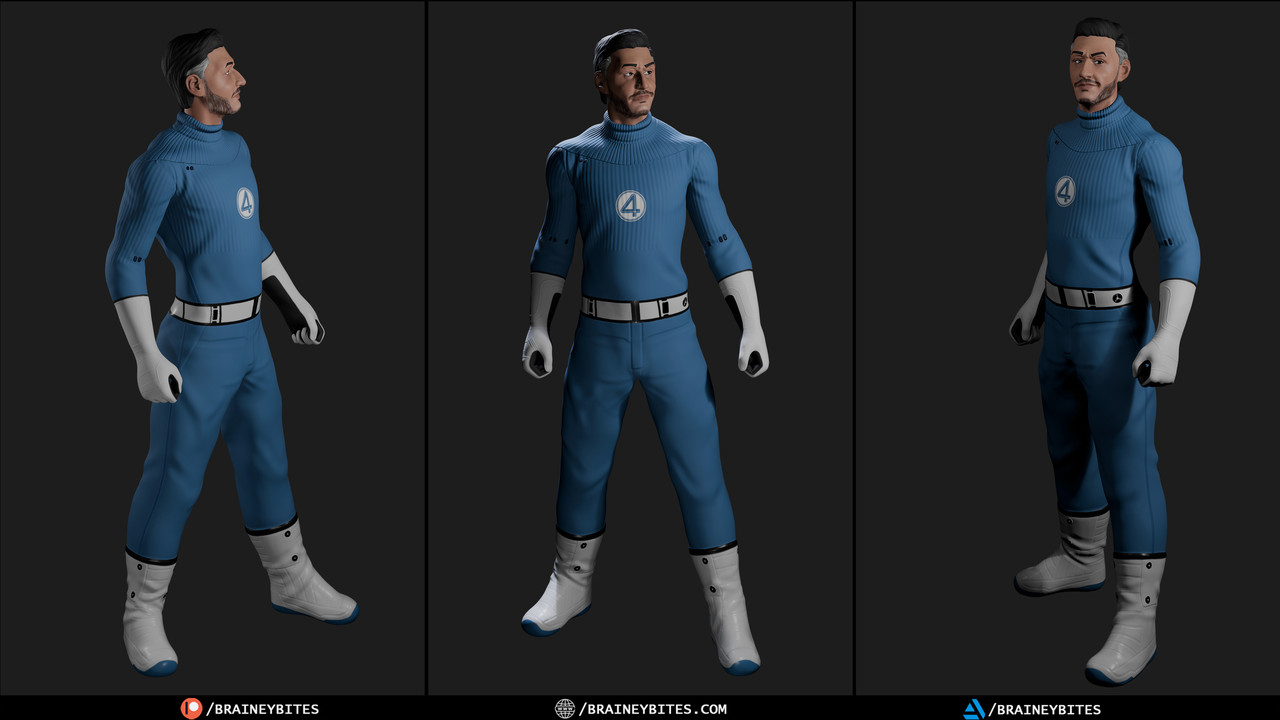
Reed Richards isn’t just a stretchy guy — he’s one of Marvel’s greatest thinkers. In this post I break down who Mr. Fantastic is, where he came from, his biggest powers and moments, how adaptations handle him, and why he’s such rich material for artists. Stick around for process shots and a timelapse link if you want to see the sculpt while I talk about his legacy.
Origin: how Reed became Mr. Fantastic
Reed Richards began as a brilliant but restless scientist obsessed with the unknown. In Fantastic Four #1, a space mission with his friends (Ben Grimm, Sue Storm, Johnny Storm) is hit by cosmic rays. The result: each of them gains powers — and Reed’s becomes elasticity. That sci-fi origin mixes curiosity, danger, and transformation — perfect narrative fuel for any character-driven artwork.
Powers & character traits (short & useful for artists)
- Elasticity / Shape-shifting: He can stretch arms, flatten, compress, and reshape his body in extreme ways.
- Hyper-intellect: Reed’s main edge is his brain — inventions, strategies, and solutions to cosmic problems.
- Inventor & leader: From the Fantasticar to unstable-molecule tech, he’s the team’s engineer and tactician.
- Emotional core: Reed’s curiosity and occasional emotional distance (especially in some storylines) make him complex — not a one-note genius.
Key comic moments (short summaries you can reference)
- Fantastic Four #1 — Team origin and first adventures.
- Galactus Trilogy (Fantastic Four #48–50) — Reed uses brains and the Ultimate Nullifier to stand against a cosmic threat.
- Fantastic Four #267 — A heartbreaking choice in the face of Annihilus; shows Reed’s willingness to sacrifice for the greater good.
- Civil War era — Reed’s political choices fracture his personal life and the team dynamic.
- Secret Wars (1984 & 2015) — Reed faces reality-level stakes and family-based consequences.
- Ultimate Reed → The Maker — A chilling alternate Reed who becomes a brutal, calculating villain.
Failures & complexity: why Reed isn’t a perfect hero
Reed’s genius is also his blind spot. His reliance on logic sometimes overrides empathy — and that’s where stories get interesting. He’s responsible for decisions that create villains (Doctor Doom’s origin ties back to Reed’s college days) and for moral choices that split allies. That moral ambiguity is gold for storytelling (and for visual contrast in art).
Screen & adaptation notes (short)
- Film and TV have highlighted different sides: family man (2000s films), younger prodigy (2015 reboot), and in the MCU (2025) a blend of genius and human stakes.
- Adaptations often favor visual spectacle (stretching set pieces) over the quieter, cerebral scenes that comics use to show Reed’s mind.
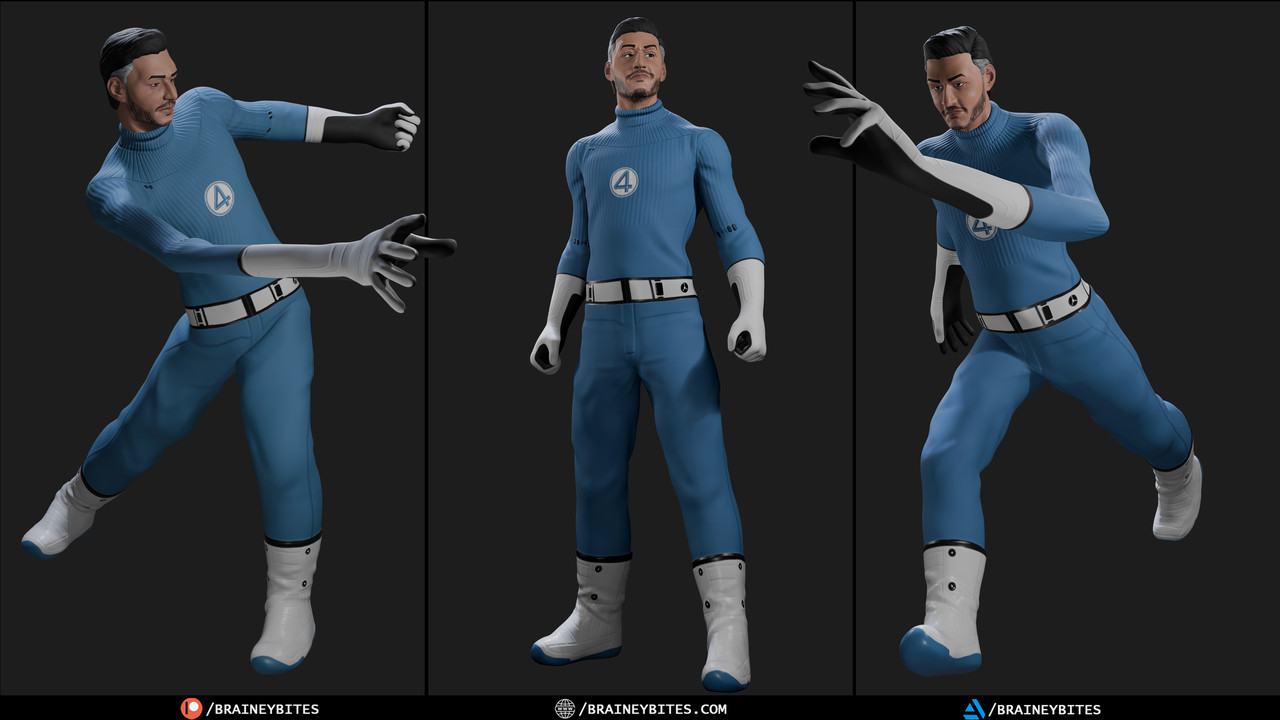
Why Mr. Fantastic is a great subject for sculpting
- Form variety: Elastic anatomy lets you experiment with silhouettes and motion language.
- Story through pose: Small facial changes and a subtle tilt can communicate intelligence or arrogance.
- Material storytelling: Add wrinkles, stretched seams, or “unstable-molecule” suit details to hint at history and tech.
Short process notes (for this blog — keep simple)
- Blocking (sphere → silhouette): Start with a simple sphere and build a clear silhouette that reads Reed’s posture (thinking/reaching).
- Primary forms: Define chest, hips, and limb flows — elastic characters are softer in some areas, taut in others.
- Secondary shapes & costume: Add suit seams, seams for stretch, and pocket elements that tell his inventor side.
- Expression & pose: Small eye/eyebrow changes sell the personality more than extreme body twists.
If you’re a sculptor or fan: watch the timelapse, screenshot a stage you like, and try a quick 5-minute sketch of Reed’s face in that pose. Post it and tag me — I love seeing other people’s takes.
Reed Richards is a study in contrasts — elastic body, rigid mind; heroism, and the risk of hubris. Sculpting him gives you a chance to marry technical skill with character storytelling. If you enjoyed this breakdown while watching the sculpt, leave a comment: which Reed moment should I sculpt next?